Wool Rugs vs Synthetic Carpet: The Honest Comparison You Need Before Buying
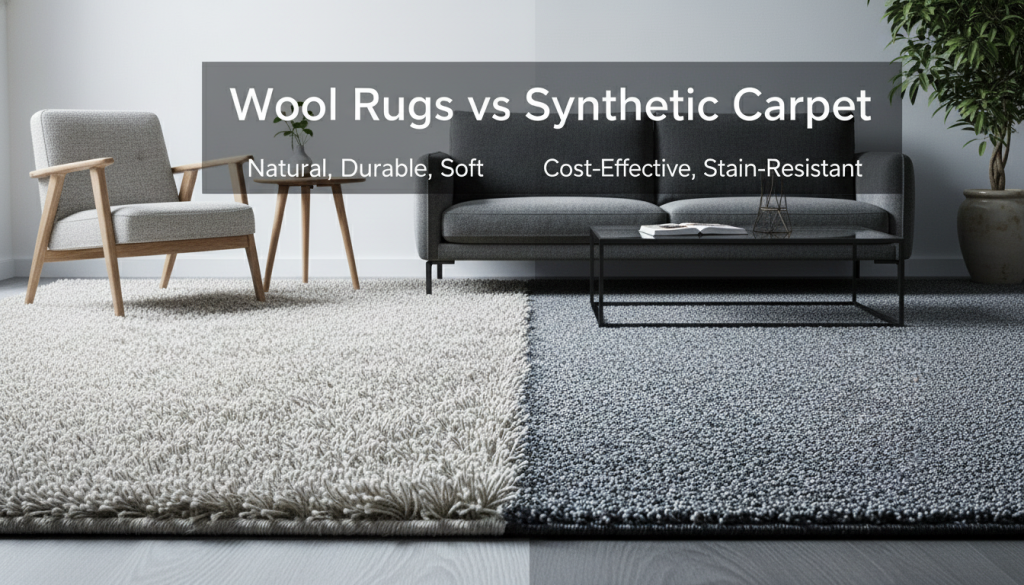
Trying to choose the best carpet for your room? It’s not as simple as you think.
You walk into a showroom thinking, “I just need something soft and stylish,”. But suddenly there are thousands of choices in front of you. Wool rugs, synthetic carpets, nylon blends, loop piles, cut piles, the list goes on.
And somewhere between budget and beauty, you start wondering: Which one will actually make sense for my home? Hence the debate of wool vs synthetic carpet. One promises natural luxury and warmth, the other, affordability and practicality.
At Silk Road Rugs, we’ve seen both sides of the story.
As specialists in authentic Persian wool carpets, we know that a good rug is a lasting piece of comfort and craftsmanship. We’re open every day so you can come and feel the difference, ask questions and pick a piece that fits your space.
So, let’s start wool v nylon carpet discussion & see which one suits the Aussie homes.
Wool and Synthetic Carpets: Where They Differ?
The main difference in wool and synthetic carpets is their material. Wool is a natural fibre harvested from sheep. While synthetic fibres are made from man-made polymers like nylon, polyester, and polypropylene (olefin).
Let’s compare them both side-by-side.
Feature | Wool Carpet | Synthetic Carpet |
Source | Sheep’s fleece | Man-made fibres |
Feel & Comfort | Soft, warm, resilient, natural bounce back feel | Varies: nylon is resilient, other synthetics are softer but flatten quicker |
Durability | High when well-made and maintained | Good, especially high-quality synthetics like nylon, lifespan varies |
Maintenance | Requires appropriate cleaning and care, some sensitivity to moisture | Easier to clean, more stain-treatments available |
Cost | Higher upfront cost | Lower cost, wide budget-friendly options |
Eco / Health Impact | Renewable, biodegradable, good indoor air quality potential | Petroleum-based, have off-gassing or less biodegradability |
From our experience in the Perth market, although synthetic carpet is used in everyday installations (due to lower cost and easier availability). Wool carpet flooring is the premium choice for homeowners for long-term value, luxury and a strong design footprint.
Why Should You Choose Wool Carpets?
There are several compelling reasons to choose wool carpets, especially from the perspective of investment and experience.
Natural Luxury and Feel
Wool gives you a soft under-foot experience from the moment you walk into a room. It has a natural spring to it, that helps your carpet look better and stay comfortable for years.
Longevity and Resilience
Well-constructed wool carpets can last decades. The natural fibre is excellent at recovering from foot traffic and retaining its shape. That’s why, we recommend quality construction and wool-rich pieces as long-term flooring solutions.
Insulation and Comfort Benefits
Wool acts as a natural insulator. It helps regulate indoor temperature and helps with sound absorption too. In Perth’s climate, it means a more comfortable space year-round.
Eco-Friendly Credentials
Wool is a renewable resource. At the end of its life, it is biodegradable. So, if sustainability matters to you, it’s a strong plus. Moreover, wool tends not to emit the same level of volatile organic compounds (VOCs) as some synthetic materials may.
Colour, Appearance and Heritage
Wool takes dye beautifully and maintains its appearance well. When you invest in a high-quality wool carpet (like Persian wool rug from us), you’re getting artistry and lasting style. See why wool rugs suit best to living rooms and how they transform your home’s look.
Are There Any Drawbacks of Wool Carpet?
Of course, no material is perfect. Although, wool carpet is natural, durable and ecofriendly, it still has some cons. Let’s discuss them one by one.
Drawback | Details | How it can be Managed |
Higher Initial Cost | Because of its natural sourcing and craftsmanship, wool comes with a higher price tag than many synthetic alternatives. | If you factor its longer lifespan, the one-time investment gives you years of comfort |
Sensitivity to Moisture and | Wool can absorb moisture up to 30% of its weight without feeling wet. But in damp or poorly ventilated areas, it is prone to mould or mildew. | Use wool in dry indoor areas with good ventilation, and maintain it properly. |
Maintenance Needs | Because the fibre is natural, it requires gentler cleaning methods. Harsh chemical cleaners may damage wool. | Vacuum weekly, use pH-neutral cleaners, and get professional cleaners. |
Colour Limitations and Fading | While wool holds dye well, strong sunlight over many years causes some fading. | Use window coverings or UV-protective films to limit sun exposure. |
Why People Consider Synthetic Fibres?
It’s not that synthetic rugs are “bad”. In fact, according to fibre-market analysis, nylon and polypropylene dominate about 90% of the commercial carpet fibre market.
Reason for high sales? Let’s see.
Cost-Effective Choice
Synthetic materials cost less upfront than wool, meaning you can cover larger areas or stick to tighter budgets.
Easy Maintenance & Stain Treatment
Synthetic fibres are manufactured with built-in stain resistance, or can be treated afterwards. So, busy households can also keep them with low maintenance.
Variety in Design
Because synthetic fibres are easier to produce and colour, there’s a wide range of patterns, textures, colours and technical levels (e.g., loop vs cut pile).
Suitable for Damp Locations
In areas where moisture is a risk (basements, rental units, playrooms) synthetic fibres perform better. Because they resist dampness and are less vulnerable to mould than natural fibres.
Disadvantages of Synthetic Fibres
That said, synthetics have trade-offs too. Here are some of the common drawbacks of synthetic carpet.
Disadvantage | Description |
Less premium feel and lifespan | No synthetic fibre can match the luxury hand-feel and long-term resilience of wool. Some fibres flatten, matt or wear quicker as compared to high-quality wool. |
Environmental & health concerns | Synthetic fibres are derived from petroleum. They are not biodegradable and can contribute to landfill waste. Some even off-gas VOCs early after installation. |
Comfort and insulation limitations | Synthetic fibres can’t provide the same warmth, bounce and thermal regulation as wool. If we see comfort underfoot and acoustic performance, wool wins. |
Static build-up and texture changes | Synthetic carpets build static in dry conditions or show footprints and vacuum marks easily. Also, cheaper synthetics lose their pile height and look worn in less time. |
Wool Carpet vs Nylon Carpet: What’s Best for Families with Small Children and Pets?
Let’s compare wool carpet vs nylon carpet in a family home with kids or pets. We have to check a number of priorities, like durability, maintenance, health and comfort.
Nylon is known among synthetics for its resilience. It is pet friendly, handles heavy foot traffic, stairs and play areas well. On the other hand, high-grade wool (with tight pile and quality backing) also holds up strongly over years.
While wool has a natural bonus in terms of indoor comfort. It regulates humidity, helps with insulation and performs better in terms of indoor air quality. For families concerned about allergies or wanting a healthier home environment, wool is more suitable.
Which Can Give You More Value for Money: Wool or Nylon Carpet?
To answer the question of wool or nylon carpet in terms of value, you want to think long term, not just short-term cost.
Yes, wool costs more at purchase. But because it offers longer lifespan, better aesthetics, and retains value (especially if well‐made), the cost per year can be lower. Synthetics cost less upfront but you’ll need to replace it sooner & it’ll look worn earlier.
If you install a synthetic carpet today and decide to replace in 4-5 years, your annual cost is higher than if you invested in wool carpet flooring once and kept it for 20 years.
In the context of real-estate in Perth, homes with premium finishes tend to appeal more. A quality wool carpet (or Persian wool rug) adds to perception of quality. So, it contributes to broader appeal and gives you higher resale value.
In our view at Silk Road Rugs, if you are willing to invest in their floors, wool (especially in Persian rugs or high-quality wool carpets) is the best path for long-term value.
Environmental Considerations: Wool Carpet versus Nylon Carpet
So, last but not the least concern. Let’s see wool carpet versus nylon carpet from the environmental lens.
Wool is harvested annually from sheep (no animal cruelty involved), processed and used in carpets or wool rugs It’s biodegradable at end of life, so it won’t linger in a landfill for centuries. Plus, it can absorb indoor pollutants, regulate humidity and beneficial for health.
Nylon and other synthetic fibres are derived from petrochemicals. They don’t biodegrade easily and require energy-intensive manufacturing. Some modern synthetics involve recycling or lower-impact production, but still can’t match natural sourcing.
Wool Versus Synthetic Carpet for Indoor Air Quality
Natural fibres like wool tend not to off-gas chemical compounds in the same way as some synthetics. That means a potentially healthier indoor environment for you and your family. So, wool wins as a more healthier carpet material.
Want a Quality Carpet Flooring for Your Home?
Visit Silk Road Rugs for Authentic Wool Rugs
Come visit us at our Mirrabooka showroom and explore our stunning range of authentic Persian wool rugs. We stock both classic and modern options for you to choose.
We’re open seven days a week to make it convenient for you. Discover the luxury, durability and heritage only true wool can offer, without paying the luxury price tag. Enjoy free shipping on all orders across Perth.
Check Out Our Wool Rug Collection